The Comprehensive Guide to Bubble Wrap: Pop Culture’s Favorite Packaging Hero
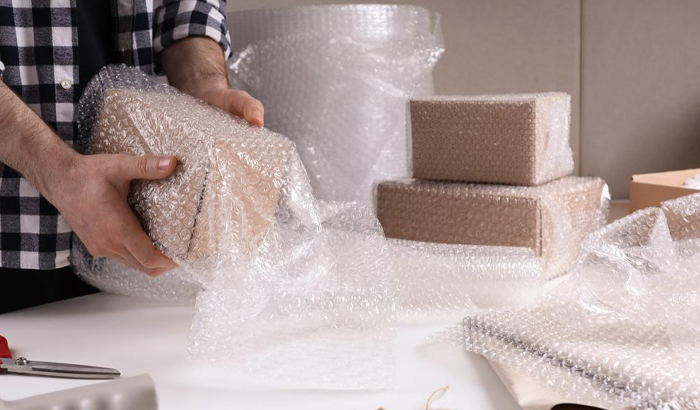
Bubble wrap is not your simple packing product, but it is a given solution to product safety and ultimately lessening shipping damages.
Electronics, glassware, jewelry, and other fragile or susceptible retail products (even meant to be stored in a warehouse or shipped across seas), selecting the appropriate bubble wrap thickness and type, can save you big in returns, unexpected damages, and shipping expenses. Let's call it a “workhorse of the shipping world!”
From bubble wrap envelopes that make your packaging smarter to biodegradable bubble wrap, in particular for sustainability, this is the guide you need to make sure you make the right choices on how to package.
You will get to know how bubble cushioning wrap works, what types are appropriate with delicate products, and how even small bubble wrap can boost security and maintain efficiency within operations.
A Quick Pop Through Bubble Wrap History
Spoiler: wallpaper flopped. But the protective potential? Massive.
The history of the bubble wrap started in 1957 when two engineers, Alfred Fielding and Marc Chavannes, accidentally developed it as they were trying to create a textured wallpaper. The trapped air design was a revolution in packaging despite the failure of the original idea.
At first, bubble wrap was not taken seriously, but its popularity was at its peak as companies discovered its unbeatable cushioning nature. From then on, bubble wrap became the industry standard for protective packaging. It is inexpensive, lightweight, and shock-absorbing.
With time, the manufacturing industry improved the design to fit industrial shipping requirements. What originally began with a 2-layered sheet of plastic changed into a multi-layered protective wrapping with different sizes of bubbles and thicknesses.
How Bubble Wrap Is Made
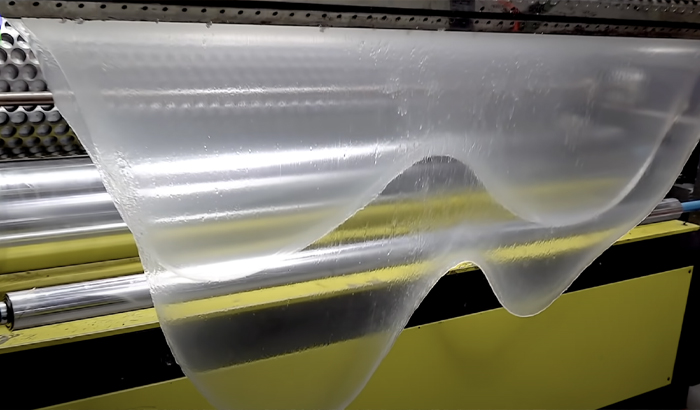
Low-density polyethylene (LDPE), a flexible and tough plastic, is the material used to make bubble wrap. In the manufacturing process, plastic resin is melted, followed by molding into sheets. These sheets are then layered together while controlled air pockets are sealed between them, forming evenly spaced bubbles. The trapped air serves as an impact absorber and prevents the items from colliding with each other.
Moreover, bubble wraps are produced using a variety of film gauges and bubble heights. One with a higher thickness is better at protecting heavy or delicate products, whereas a wrap with a lesser thickness is better suited for lightweight items.
Tip: Rigid box and bubble wrap go hand in hand when it comes to increased protection and adding an exclusive touch.
Understanding the Different Types with Their Uses
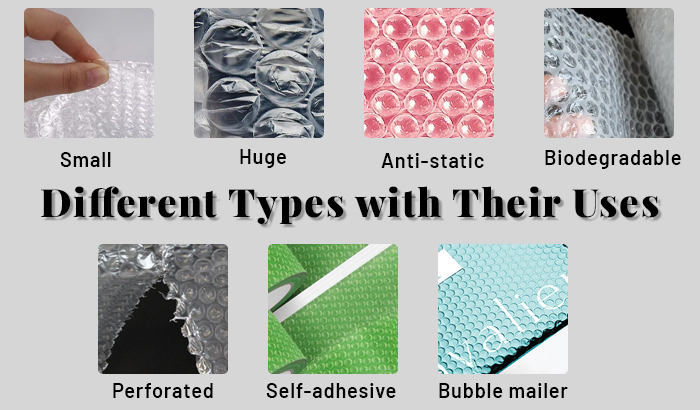
The variety of bubble wrap depends on the sensitivity of the product, the distance of shipping, and the sustainability objectives. Bubble wrap is used in businesses dealing with sensitive things since it can fit any shape or size. It can be used either within cartons or as a bubble wrap within a custom product box, providing regular protection with minimum exertion.
- Small bubble wraps are a great option for protecting the surface because they have tightly packed air pockets. Consider them the best pick for delicate or expensive products such as glassware and cosmetics.
- Huge (large) bubble wrap is highly shock-/absorbing; chosen for heavy and high-value items, including electronics and automobile parts.
- Anti-static bubble wrap is actually electronics-specific (for instance, circuit boards), as it prevents the occurrence of electrostatic discharge.
- Biodegradable bubble wrap is a solution to environmental issues because it decomposes more quickly than conventional plastic. It is a must-have for eco-chic brands.
- Perforated bubble wrap is another type that supports easy tearing by being pre-cut at regular intervals. In high-volume operations, it significantly cuts down material waste. It finds its application in warehouses and fulfillment centers for fast, efficient packing.
- Self-adhesive bubble wrap adheres to itself without the need for tape, directly speeding up the logistics. It is advised particularly for products with irregular shapes. It helps avoid scratches and fractures in long-distance shipping.
- Bubble mailer boxes and padded envelopes offer small goods amazing protection and ease of shipping by combining an inside bubble cushion with an exterior mailing layer.
Businesses use bubble wrap rolls, sheets, and small bubble wrap pouches based on the packaging processes. On the contrary, bubble wrap shipping bags and bubble wrap envelopes are a preferred pick for small goods, where both the cushioning and the outer protection are necessary.
Most importantly, you can appreciate it for offering short-term insulation and temperature regulation. Its popularity extends to industrial packaging across the globe, as it can be used as bubble wrap phone case protection as well as in industrial shipping.
Learn About Wrap’s Thickness
Achieving the ideal thickness requires striking a balance between cost and protection. Too thin? dangerous. Too thick? waste of money and overkill.
Not all bubbles are created equal. The thickness of the bubble wrap has a direct impact on how well your item is protected. Generally speaking, there are three typical bubble sizes:
3/16"
Perfect for packaging delicate and lightweight things, such as jewelry, electronics, gadgets, and perfumes.
5/16"
The preferred all-around player, which is excellent for everyday shipping, books, cookware, and décor items.
1/2"
Heavy-duty padding for expensive or large objects. Consider monitors, appliances, or breakable glassware.
Read More: How to Mail a Bubble Mailer Effectively? Complete Guide
Why Bubble Wrap is So Effective
Bubble wrap has high shock absorption because of the structure that is filled with air, giving it the ability to serve in risky deliveries. Moreover, its flexibility enables it to address various fields, such as those in retail or healthcare. The fact that it is lightweight, even though it is very strong, is beneficial because businesses can lower shipping expenses.
Additionally, bubble cushioning wrap is easy to shape around products and ensures that products do not move within the packages. Another advantage is easy access, i.e., it does not demand any special equipment, license, certification, or education.
Bubble Wrap Envelopes vs. Bubble Wrap Shipping Bags
You have most likely used bubble wrap, shipping bags, or envelopes if you mail smaller items.
| Feature | Bubble Wrap Envelopes | Bubble Wrap Shipping Bags |
| Material | Paper exterior with inside bubble lining | Plastic-made, padded mailer |
| Ideal For | Documents, books, flat items | Items needing water resistance, flexible shipping |
| Protection Level | Light cushioning | Moderate cushioning complemented with moisture protection |
| Shipping Cost | Slightly higher (heavier than plastic) | Lower (lightweight + flexible) |
| Presentation | Professional and polished look | Functional and practical |
| Best Use | Small business shipments, gifts, documents | E-commerce, weather-prone shipments, cost-saving deliveries |
Is Bubble Wrap Recyclable?
Is bubble wrap recyclable? This is the big environmental question!
Yes, technically, but not in your typical curbside trash can. Like shopping bags, bubble wrap is categorized as plastic film. Because it clogs machinery, the majority of recycling facilities are unable to process it through home recycling systems. Nonetheless, a lot of supermarkets and recycling facilities take plastic film. The most important guideline is to never discard bubble wrap in regular recycling bins unless specifically permitted by your local government. Reuse it, even better! Before it wears out, bubble wrap can withstand several shipping cycles.
Industrial Applications of Bubble Wrap
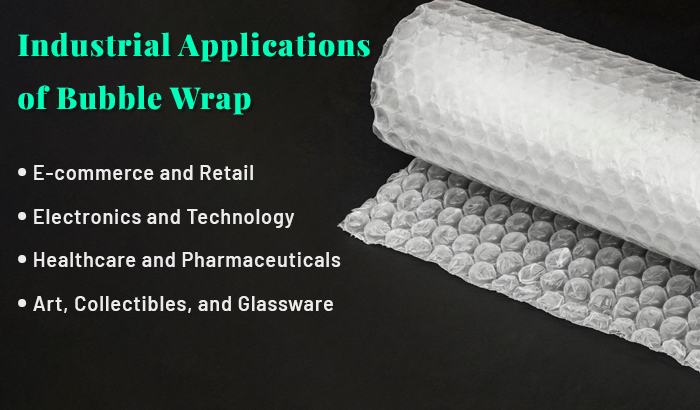
Bubble wrap is widely used across multiple industries for protecting products during storage, handling, and shipping.
E-commerce and Retail
Bubble wrap is heavily used in the online retailer industry to deliver products in the last-mile delivery while protecting them. Shipping bags and bubble wrap envelopes facilitate the final process as well as improve the unboxing moment.
Electronics and Technology
Anti-static bubble wrap is needed to protect circuit boards, other devices, and accessories against impact and primarily static damage. Use it with appliance boxes.
Healthcare and Pharmaceuticals
Medical equipment and drug products demand contamination-free cushioned wrapping. Well, bubble wrap promises secure transportation and protected storage while maintaining hygiene standards.
Art, Collectibles, and Glassware
Glassware, sculptures, paintings, antiques, and other precious and delicate objects require special preservation. It is possible to adjust the bubble wrap's thickness and size to achieve the best possible cushioning and break resistance.
How to Choose the Right Wrap for Shipping
The selection of bubble wrap is not arbitrary. The product kind, transportation distance, and degree of danger all have a role. Consider this:
- Are you shipping a sturdy or a breakable object in your gift box?
- How far is it going?
- Will it be handled roughly?
- Is it possible to be exposed to moisture?
- Are eco-friendly materials required?
Tip: The goal of smart packaging is to use the appropriate material, not more. It is safer to use thicker bubble wrap when shipping internationally.
6 Pro Tips for Businesses Using Bubble Wrap
- Purchase rolls in quantity to reduce the cost per unit.
- It best complements corrugated boxes.
- Sheets that are pre-cut for quicker packing lines.
- To preserve air retention, store in dry locations.
- Teach employees how to wrap properly.
- Use in conjunction with void fill for optimal defense.
Product returns, refunds, and consumer complaints are all decreased by well-packaged goods. Remember, it is less expensive to use bubble wrap than to replace damaged stock.
Conclusion
Bubble wrap remains one of the foundations of the modern packaging world (its flexibility, low price, and ability to protect) because of its flexibility, low cost, and ability to safeguard items effectively. To make informed decisions that can improve product safety and brand reputation, one only has to make sure that the decisions made are in line with the needs of sustainable operations.
Bubble wrap has its own future to look forward to, which is innovation; the materials are lighter, more eco-friendly, and smarter packaging designs. We Print Your Box is a company that can assist businesses in finding the appropriate bubble wrap solutions that meet their needs. To speak to an expert or to design a unique solution to packaging, dial 888-385-1812 and securely pack your products. With us, you can enjoy free shipping, the lowest MOQs, free design help, and faster turnaround.
Recent Posts:
Types of Tamper-Evident Packaging That Protect Medicines from Risk and Interference
One of those things we frequently take for granted is medication safety (until something goes wrong)...
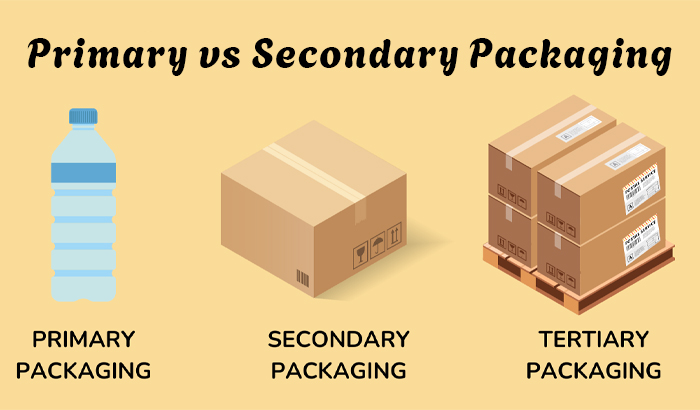
Primary vs Secondary Packaging: What’s the Real Difference?
Packaging is everywhere! It wraps delicate goods during transportation, sits on grocery store shelve...
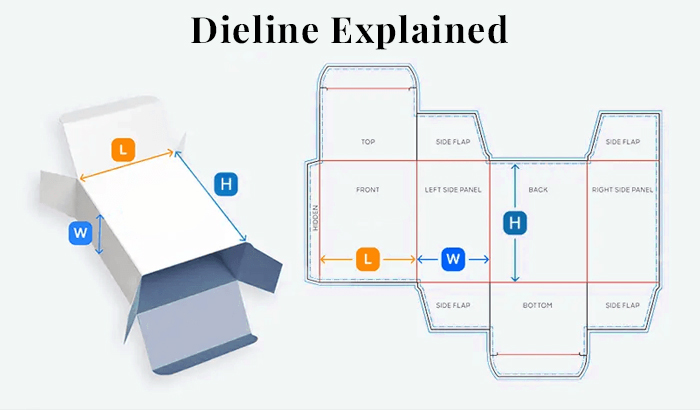
Dieline Explained: The Backbone of Smart Packaging Design
If packaging were a building, the dieline would be its blueprint. Dielines are invisible to custo...